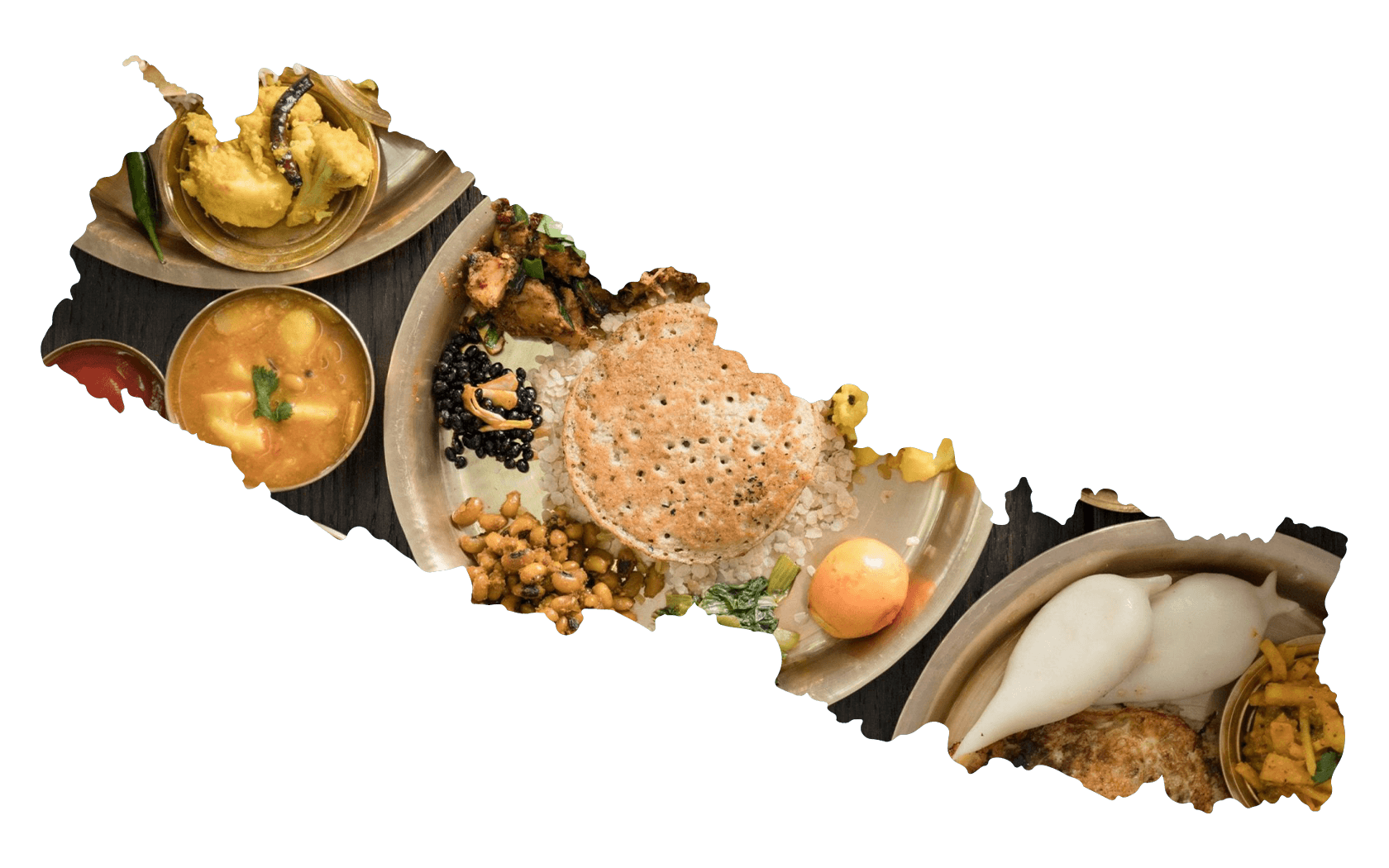


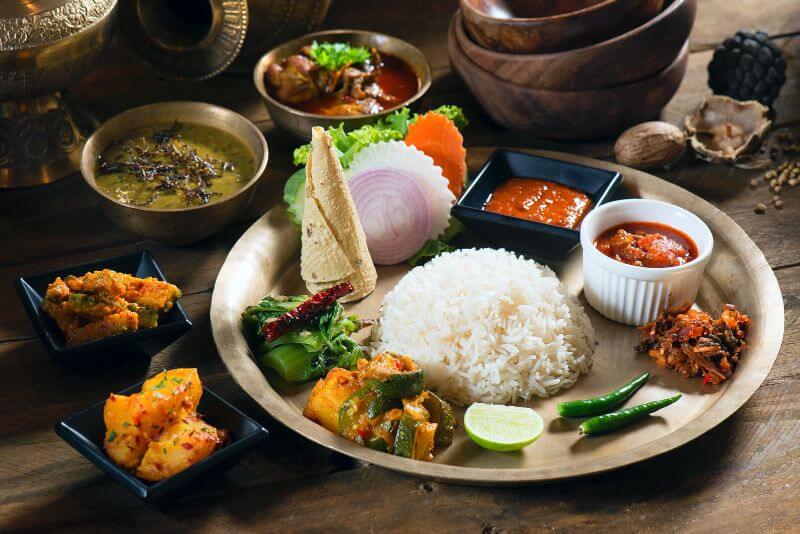
 Wherever you go, your trip would be incomplete without getting an opportunity to taste the local cuisine. Nepal is the land of diverse cuisine. The vast number of ethnic groups have their own deicacies depending on the topography and climate of the region. Rice is the major source of energy in the country, and Nepali people love to consume two times a day, as lunch and dinner, on a daily basisi. However, side dishes may vary from lentils to vegetable curries to meat curries to extremely spicy pickle and in the Himalayan region their meals are completely different.
Rice remaining constant, the side dishes bring in a lot of variety to the meals in the Nepali cuisine. Depending upon culture and ethnicity, cooking in the Nepali homes (where the cooks are always the housewife) tend to settle curries with complex spices that she has learned from her mother, which traditionally has been in use for centuries. Nepal's cuisine is mostly, but not all of them, spicy, however on request, spices can be reduced without compromising the taste of the dish.
Newars, indigenous to the Kathmandu Valley, cater the best snacks in the country. Their cuisine makes much use of buffalo meat, however, their vegetable soup, made of potato and bamboo shoot, is something else. They have a large variety of meat dishes using every part of what's availabl like the liver, interstine, lungs etc. They arre especially cooked during feasts but are popular dishes in little eateries where people go to drink and ask for these as snacks.
People of mid-hills of Nepal are renowned for their heavy and delicious lunches.
Wherever you go, your trip would be incomplete without getting an opportunity to taste the local cuisine. Nepal is the land of diverse cuisine. The vast number of ethnic groups have their own deicacies depending on the topography and climate of the region. Rice is the major source of energy in the country, and Nepali people love to consume two times a day, as lunch and dinner, on a daily basisi. However, side dishes may vary from lentils to vegetable curries to meat curries to extremely spicy pickle and in the Himalayan region their meals are completely different.
Rice remaining constant, the side dishes bring in a lot of variety to the meals in the Nepali cuisine. Depending upon culture and ethnicity, cooking in the Nepali homes (where the cooks are always the housewife) tend to settle curries with complex spices that she has learned from her mother, which traditionally has been in use for centuries. Nepal's cuisine is mostly, but not all of them, spicy, however on request, spices can be reduced without compromising the taste of the dish.
Newars, indigenous to the Kathmandu Valley, cater the best snacks in the country. Their cuisine makes much use of buffalo meat, however, their vegetable soup, made of potato and bamboo shoot, is something else. They have a large variety of meat dishes using every part of what's availabl like the liver, interstine, lungs etc. They arre especially cooked during feasts but are popular dishes in little eateries where people go to drink and ask for these as snacks.
People of mid-hills of Nepal are renowned for their heavy and delicious lunches.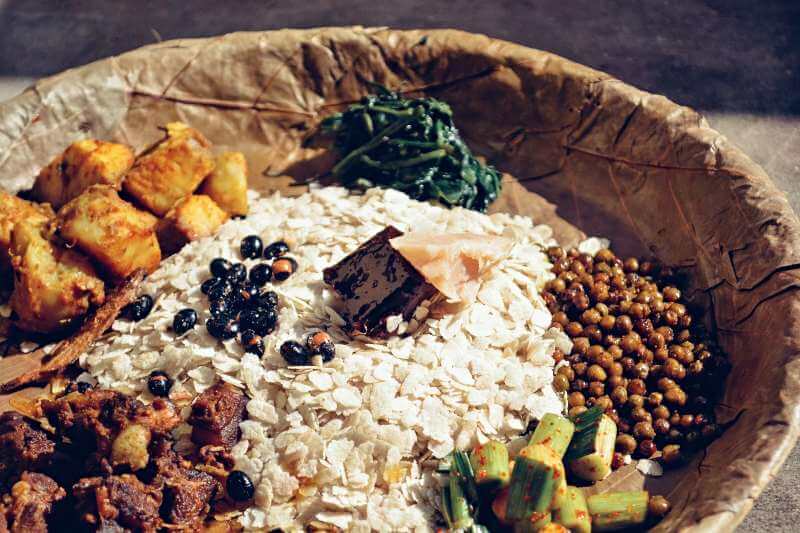 Especially, Thakalis are notable for producing high-grade rice, lentils, vegetables, and curries in the country. Even Kathmandu is filling up with Thakali restaurants. But Pokhara is one of the best palces to try Thakali food if not the trekking routes where they live in the Annapurna region.
The Himalayan cuisine of Nepal is much influenced by Tibetan culture. Exquisite yak cheese of the Himalayan region is notably famous all over the country, and beyond. Butter tea and noodles are also often consumed in this region.
The lowlands of Nepal, Madhesh (Tarai), is the grain producing region of the country. Much of the food and fruits of Nepal are produced in the vast sweltering plains. Tharu, indigenous locals of the Tarai make delicious food of 'chicher' and they are also known to make mouth watering fish curry as they are keen fishermen besides being farmers.
Nepali people, normally have their lunch before leaving for work, school, or colleges. So, there is a system of having a healthy, but lighter meal during lunch time accompanied by tea. But with changing times, the younger more affluent generation follows the western system of breakfast, lunch and dinner. For many theTibetan dish called momo is the staple diet during lunch. However this delicacy has been localized by adding a spicy soup in which the momos are floated and eaten together the way one eats noodle soup.This is known as momo cha and is religiously served at every party and by most restaurants in town as if its the national dish.
Especially, Thakalis are notable for producing high-grade rice, lentils, vegetables, and curries in the country. Even Kathmandu is filling up with Thakali restaurants. But Pokhara is one of the best palces to try Thakali food if not the trekking routes where they live in the Annapurna region.
The Himalayan cuisine of Nepal is much influenced by Tibetan culture. Exquisite yak cheese of the Himalayan region is notably famous all over the country, and beyond. Butter tea and noodles are also often consumed in this region.
The lowlands of Nepal, Madhesh (Tarai), is the grain producing region of the country. Much of the food and fruits of Nepal are produced in the vast sweltering plains. Tharu, indigenous locals of the Tarai make delicious food of 'chicher' and they are also known to make mouth watering fish curry as they are keen fishermen besides being farmers.
Nepali people, normally have their lunch before leaving for work, school, or colleges. So, there is a system of having a healthy, but lighter meal during lunch time accompanied by tea. But with changing times, the younger more affluent generation follows the western system of breakfast, lunch and dinner. For many theTibetan dish called momo is the staple diet during lunch. However this delicacy has been localized by adding a spicy soup in which the momos are floated and eaten together the way one eats noodle soup.This is known as momo cha and is religiously served at every party and by most restaurants in town as if its the national dish.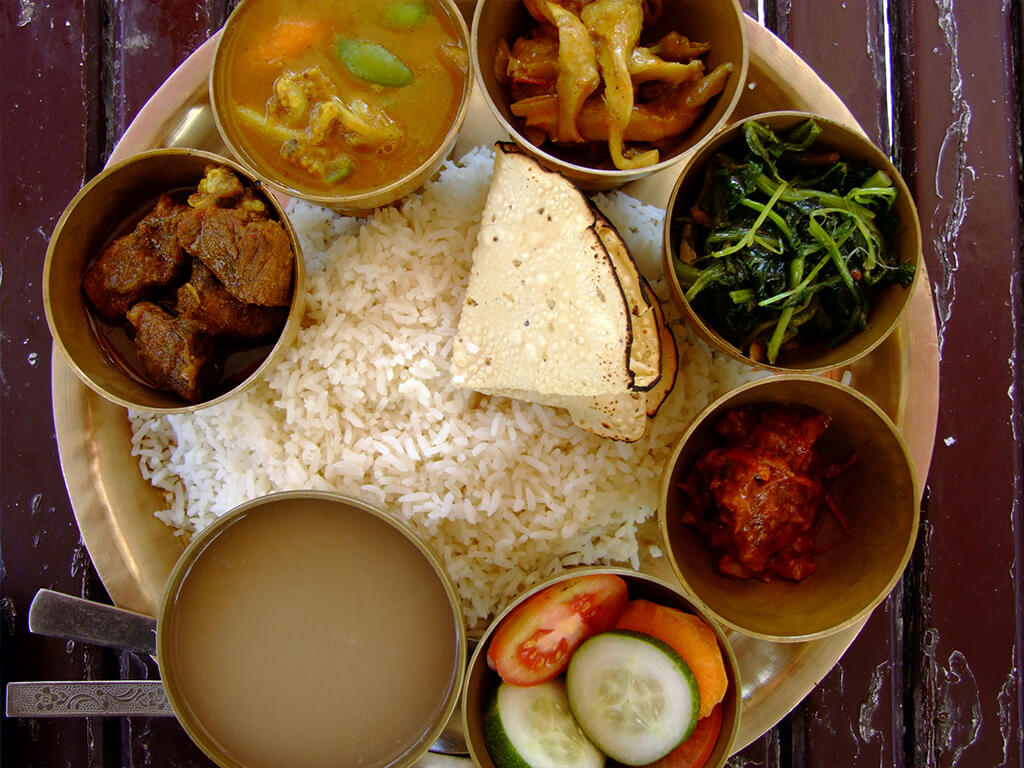
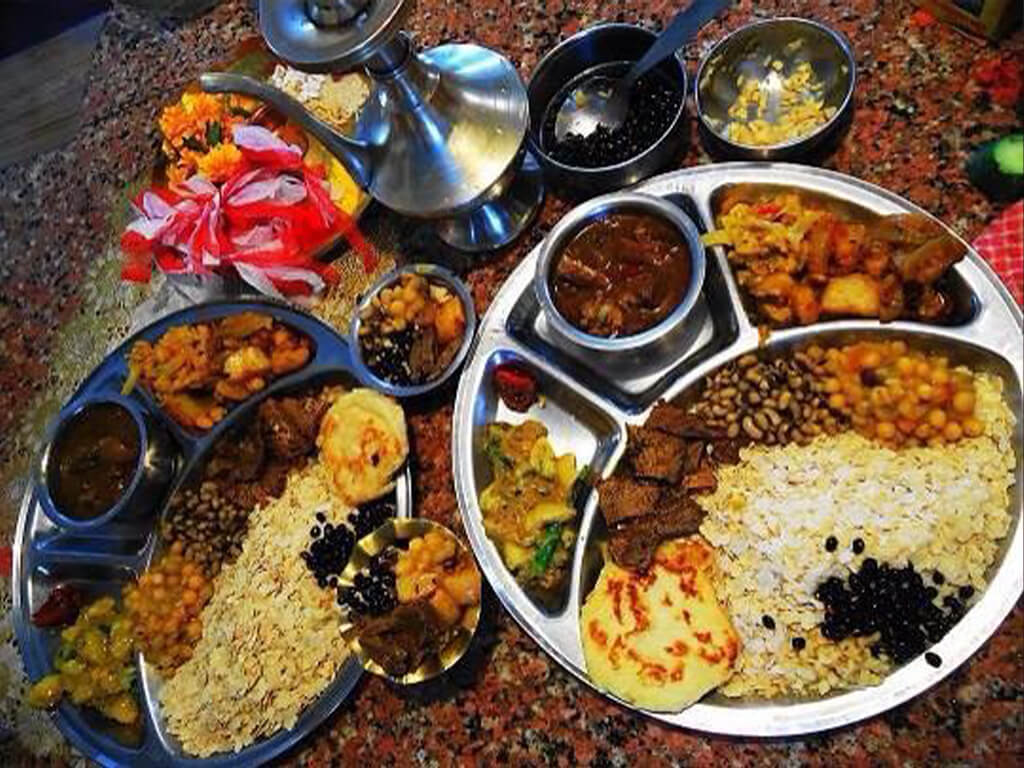
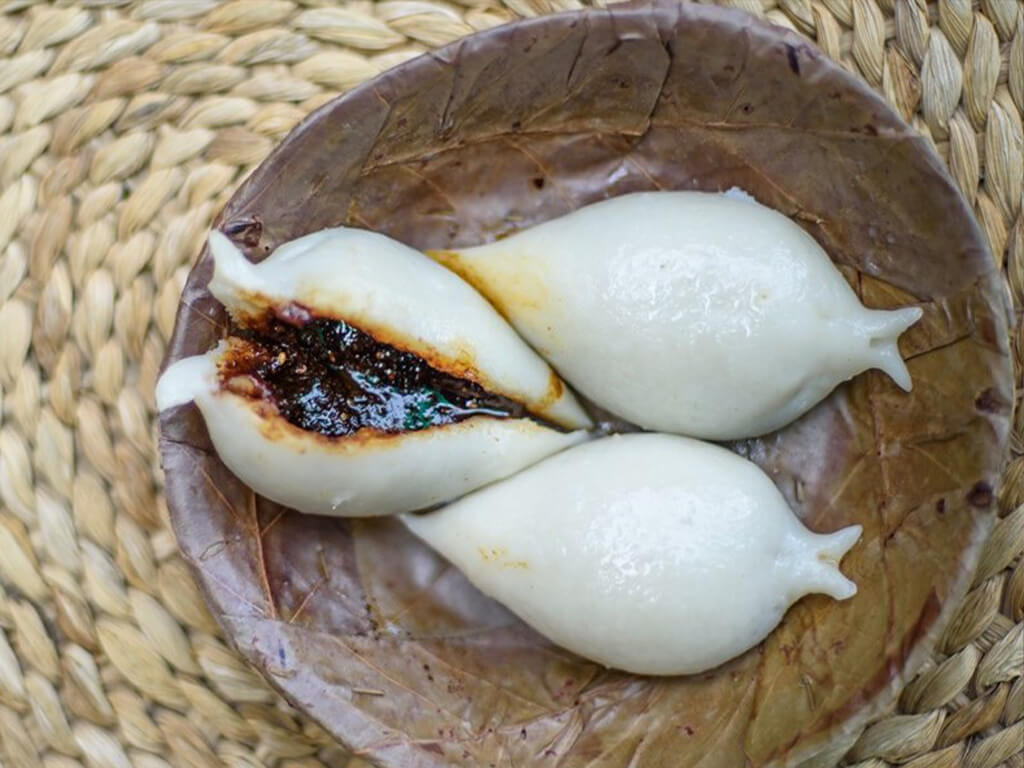
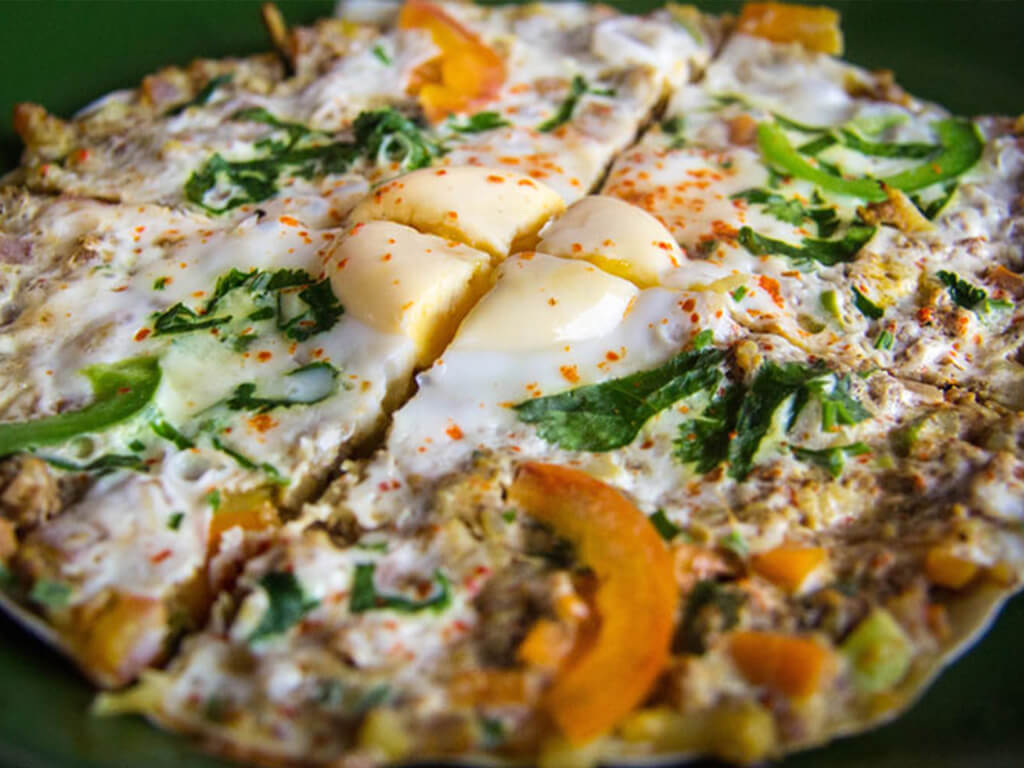
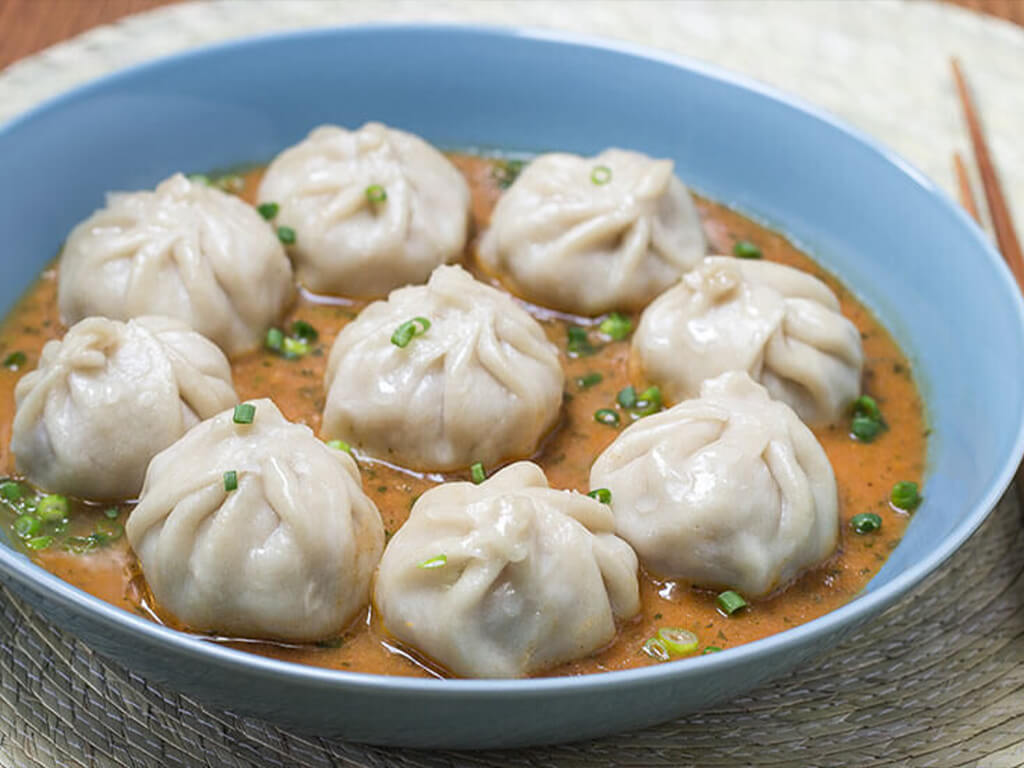
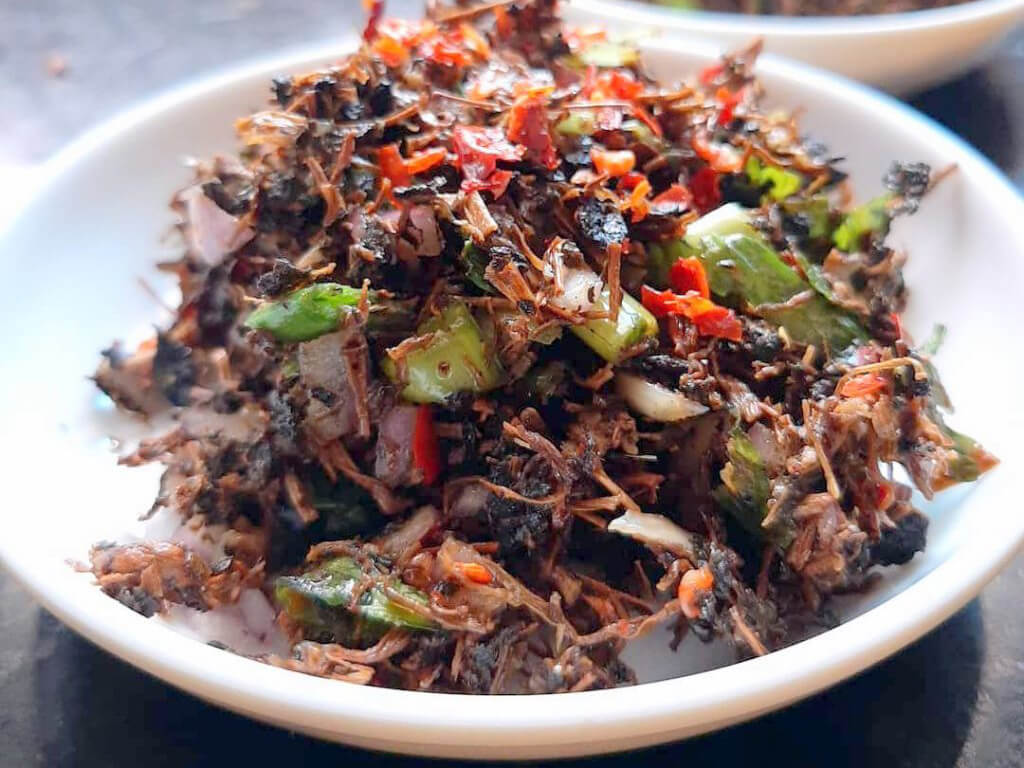
Nepalese Cuisine combines a range of ingredients, techniques and characteristics from its neighboring countrie,s with its own gastronomic history.